



As my grandmother used to say, you can't make coffee without grinding a few beans. (She may have had the expression wrong, but you get the idea.) Regardless, grinding is an essential part of the brewing process, as you're influencing exactly how your water is going to interact with the coffee itself—and ultimately what ends up in your cup.
Next time you're grinding up your beans, keep these tips in mind so that your coffee lives up to its fullest potential.
Choose your brewing method. Then your grind size.
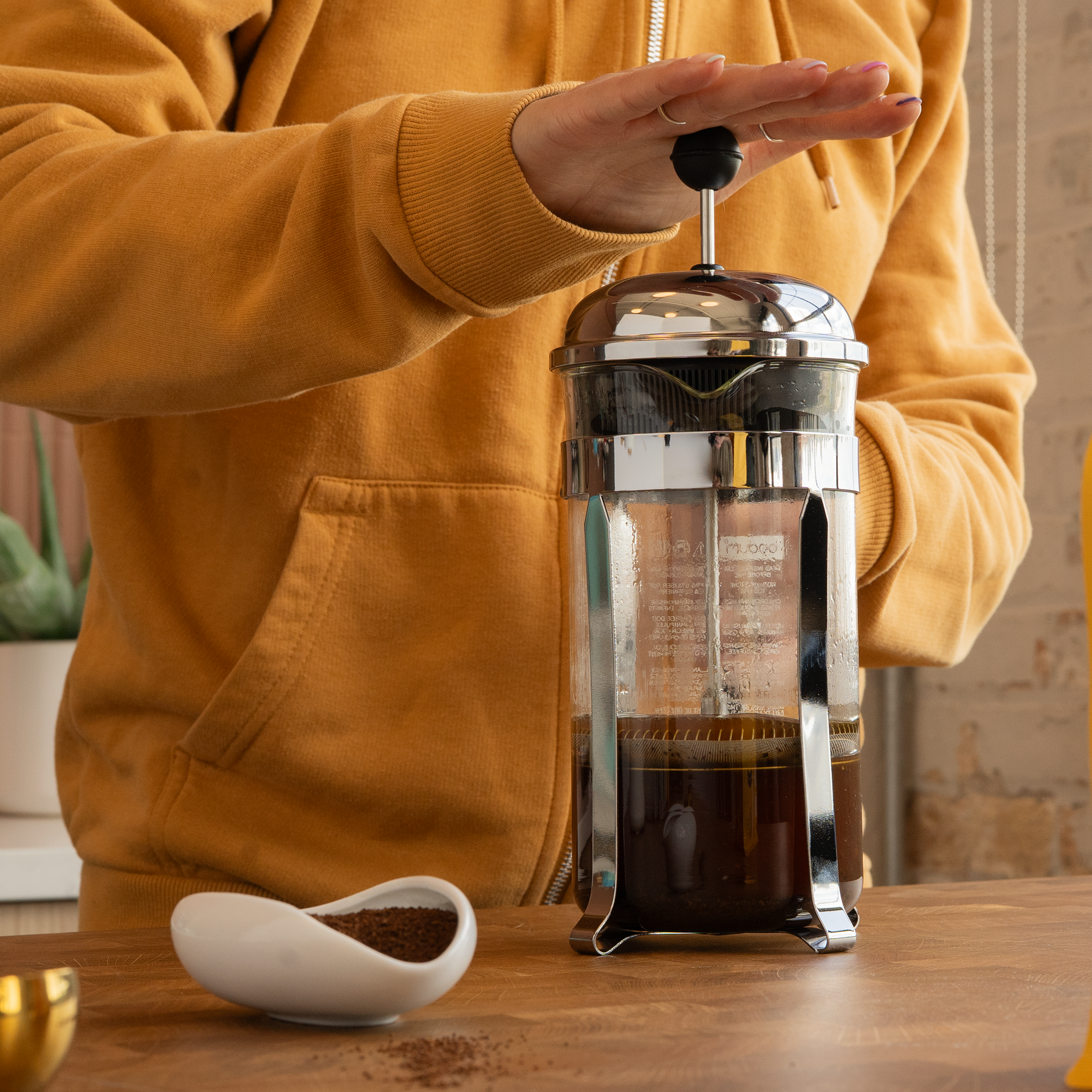
If you remember nothing else, remember this: your grind size is determined by how you're brewing your coffee. Different brewing methods call for different grind sizes based on how long water is in contact with the coffee. For example, if you're brewing with an Aeropress or moka pot which brew quickly, you’ll generally want finer grounds. For a standard drip coffee maker or pour-over, you should use medium grounds. And for a slower brewing method like a French press or cold brew, start with coarse grounds. If you don't want to handle this yourself, you can always buy any bag of coffee pre-ground from us—we'll send you the perfect grind for however you're brewing.
Invest in a good grinder.
Let’s talk grindset. If you've been a coffee drinker for a while, you've probably seen the standard blade coffee grinders. You place coffee beans in the top, press down the lid (or a button) and try to time how long you need to grind. While these blade grinders are wallet-friendly and fun to use, they provide very inconsistent results. You're likely to end up with a mix of very fine and very coarse grounds, which makes it difficult to brew an excellent cup. If budget allows, invest in a burr grinder instead. Burr grinders allow you to choose a specific grind setting, taking out much of the guesswork. And because burr grinders crush the beans rather than "cutting" the beans with a blade, you achieve a far more consistent grind—and a better-tasting cup.
Here are a few of our favorite burr grinders, if you’re ready for one:
Entry level: Hario “Skerton Pro” Ceramic Coffee Mill (about $55)
Mid-tier: Baratza Encore Conical Burr Coffee Grinder (about $150)
Top-tier: Fellow Ode Brew Grinder Gen 2 (about $400)
Grind right before you brew.
Remember high school, when you’d wait until the last possible moment to get that essay done? Coffee is maybe the only part of life where that approach comes in handy. If possible, wait until right before you brew to grind your beans. (And we don’t mean “the same day,” we mean like one minute before you brew.) This helps preserve the coffee’s aroma and freshness, since many of the compounds that create flavor are volatile and dissipate quickly once ground. If you don’t grind your own coffee beans, place your grounds in a sealed airtight container and store in a cool, dark place until it's time to brew.

Remember that grind size is also about efficiency.
Grind size has a huge impact on taste, but choosing the wrong grind size can also slow you down and even clog your coffee filters. For example, if you try to make a pour-over with very fine grounds, you'll be waiting forever for your brew to finish because the water struggles to pass through. On the flip side, if your grind is too coarse, water can move too quickly and leave your coffee under-extracted.
Fix bad coffee by tweaking your grind size.
The great thing about coffee is that it tells you what it needs. If you made a cup and it's not tasting right, grind size is often the culprit. When coffee tastes watery or sour, it's a sign that you may need finer grounds. Coffee tasting bitter or harsh? It may be over-extracted and you’ll want coarser grounds next time.
Once you master the art of grinding, everything gets easier—you’ll get more delicious results, receive a compliment or two from your family members, and probably even recognize some tasting notes you never noticed before.
So what will you grind next? If you’re looking for a place to start, consider one of our fan-favorite blends or a single origin from one of the world’s best coffee regions—ground exactly for how you brew.


